
Principles of green cleaning and how it improves our environment.
- Adriana Videnova
- Jan 18
- 2 min read

Green cleaning is becoming increasingly popular as a way to keep things clean while protecting the environment and people's health. But how does green cleaning work and why is it important to implement it in our daily lives? This article will look at the basic principles behind this approach and show how they contribute to a healthier and more sustainable environment.

What is green cleaning?
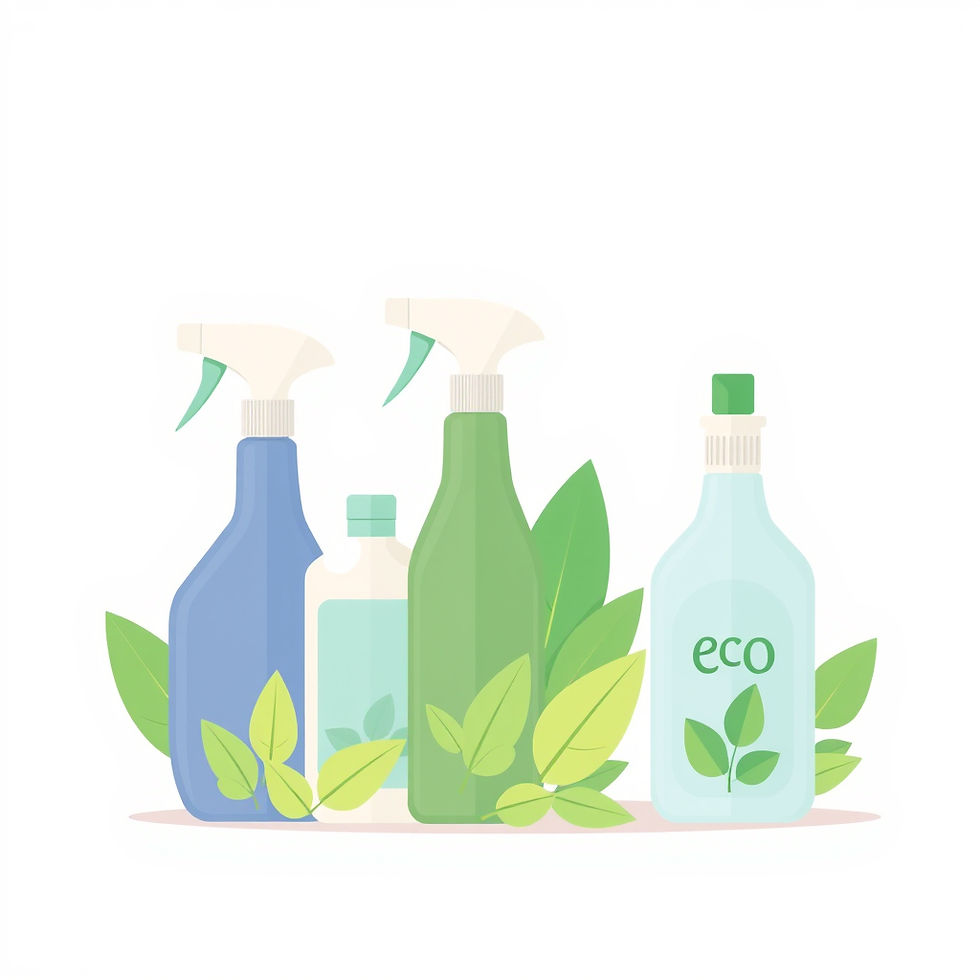
Green cleaning uses products and methods that minimize the harmful impact on nature and human health. Instead of harsh chemicals that can pollute the air, water, and soil, this approach relies on natural ingredients and biodegradable materials. This means that cleaning products are safer to use in the home, office, and public spaces.
Basic principles of green cleaning
Use of natural and biodegradable products
One of the key principles is to choose cleaning products that contain natural ingredients like vinegar, baking soda, lemon juice, and essential oils. These products not only clean effectively, but also break down quickly in nature without leaving toxic residues.
Minimizing waste
Green cleaning encourages the use of reusable and recyclable packaging. For example, glass bottles of concentrates or powder detergents that dissolve in water reduce plastic waste. Also, using microfiber cloths and long-lasting brushes helps reduce waste from paper towels and disposable materials.
Energy efficiency and water
Green cleaning also includes practices that conserve energy and water. For example, cleaning with warm rather than hot water, using energy-efficient appliances, and avoiding unnecessary rinsing. This reduces the overall environmental footprint of cleaning.

Health safety
Green cleaning products are free of harsh chemicals that can cause allergies, skin irritation, or respiratory problems. This makes them suitable for families with children, people with sensitive skin and allergies, and pets.
How green cleaning improves the environment
Reducing chemical pollution
Traditional cleaning products often contain phosphates, chlorine, and other toxic substances that end up in rivers and soil. Green products break down faster and do not accumulate harmful chemicals in nature, which helps protect water resources and soil.
Improving air quality
Many cleaning products emit volatile organic compounds (VOCs) that pollute indoor air. Green cleaning uses products with low or no VOCs, resulting in cleaner, healthier air in the home and workplace.
Support for sustainable practices
Choosing green products supports companies that are committed to sustainable production and ethical standards. This encourages the market to offer more environmentally friendly solutions and reduces reliance on harmful chemicals.
Practical tips for implementing green cleaning at home
Use vinegar and baking soda to clean kitchens and bathrooms.
Replace paper towels with microfiber ones that can be washed and reused.
Buy concentrated cleaners in refillable glass bottles.
Avoid products with artificial flavors and colors.
Plan your cleaning to use minimal water and energy.


Comments